Table of Content
The use of urinary catheters is a common part of veterinary practice. If the catheter is meant to stay in the bladder, smaller, flexible catheters are commonly used. Larger, sturdier catheters are chosen if the purpose is to aspirate urine quickly or to push past a urinary obstruction. Because this procedure is painless, most male animals will not need sedation or anesthesia. The aftercare of the urinary catheterization procedure will depend on if the catheter is removed shortly after or a permanent placement. Observing the dog is the best thing that can be done following urinary catheterization.
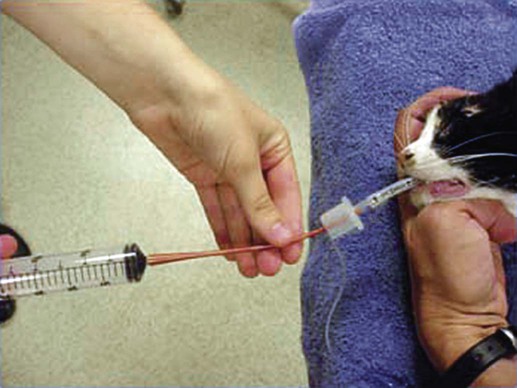
If that’s the case, of course some sort of anesthesia will be needed. If this blockage isn’t treated, urine can back up and damage your kidneys. In severe cases, a ureteral obstruction can lead to kidney failure, sepsis (life-threatening infection) or death.
Do catheters hurt dogs?
A man can leave a large loop of catheter at the end of the penis, so that when he gets an erection, there’s a length of catheter to accommodate the penis. The catheter can be held in place using a condom or surgical tape. Vaginal swab cytology as a diagnostic tool for neoplasia of the lower urinary tract in 5 dogs. Wearing gloves whenever handling the urinary catheter, bag and lines, in conjunction with performing hand hygiene. The vulval lips are grasped and extended ventrally, whilst the catheter is inserted along the ventral midline of the vestibule. A vaginal speculum may be used to facilitate direct visualization of the urethral orifice.

Evaluation of palliative stenting for management of malignant urethral obstructions in dogs. Cleaning the prepuce/vulva, the external portion of the catheter, collection system and all connections with a diluted antimicrobial skin solution every 4-6 hours. The catheter should advance into the external urethral orifice without the need for visualisation. The external urethral orifice can be visualised along the ventral aspect of the cranial vestibule. Sometimes, the veterinarian will leave the catheter in anywhere from minutes to hours. If the dog needs the catheter in for a prolonged period of time, steps are taken to ensure the dog can not get the catheter out.
What is a tomcat catheter?
Sometimes you may wait to hear from the veterinarian about any test results. Dogs undergoing surgical procedures will usually require a urinary catheter to be inserted either before or after the procedure. Any veterinarian who is certified by the American Board of Veterinary Specialties is usually capable of inserting a urinary catheter into a dog. An alternative form of fluid administration is the Esophagostomy tube.
Use the tape and flush method to estimate the cost of the catheter and port. Make sure that errors requiring more than one catheter are covered. Consider the type of surgery, length, patient parameters, and potential risk factors. You want healthy, happy patients, as well as a healthy bottom line. In the past, disposal of used needles and syringes was simple. One could simply place used syringes, lancets, and other sharps in a thick plastic container and discard the entire container in the regular trash when it was full.
How Much Does It Cost To Remove A Urinary Blockage In Cats?
Usually this involves sutures and/or a glue safe for skin. In some dogs, the urethral opening is close to the external vestibule opening; in others, it is more cranial and may be closer to the pelvic floor. The most common cause of cystitis in dogs is an infection caused by bacteria. Other common causes include bladder stones, tumors, or polyps in the bladder, and abnormal anatomy . While you’re wearing a catheter, you may feel as if your bladder is full and you need to urinate.

The dog may need to wear an Elizabethan collar while the catheter is in place. The dog owner should also be able to see urine flowing through the catheter. It is also important that dog owners wash their hands before and after handling their dog’s urinary catheter.
Subcutaneous fluids, which can cost between $15 and $30, may also be required. Permanent cystostomy catheters were placed in 7 dogs to relieve urine outflow obstruction from presumed transitional cell carcinoma of the bladder trigone and urethra. The most frequent complication was urinary tract infection.

There will be a small clamp of some kind on the fluid line that will enable you to open and close the line. For subcutaneous fluid administration, the line will either be closed or all the way open . Sometimes the tubing kinks slightly when it has been pinched closed for a while. You may use your fingers to re-open the line and move the clamp to a different area on the tubing so as not to keep pinching the same area of tubing.
There are numerous circumstances under which a patient might require fluid administration under the skin in the home setting. Any time extra fluids are needed to insure hydration, fluids under the skin are generally easy for a pet parent to provide and comfortable for the pet to receive. A patient might need fluids temporarily or on-going as for an indefinitely problem such as renal insufficiency. In either case, if you are reading this, subcutaneous fluids have probably been recommended for your pet and you have received a demonstration on fluid administration already. This guide is meant as a hand "tip sheet" for when you are on your own at home with your pet. There are several side effects that you may have if you have a urinary catheter.
If using the blind method, the external urethral orifice can be palpated as a small, round, firm mass around 2.5-5cm from the vulva, along the ventral aspect of the vestibule. Using their index finger, the nurse guides the catheter tip into the urethral orifice. It is possible that the catheterization did cause some trauma and that caused the blood in his urine. I hope it all goes well for him and you are able to keep him healthy. Therefore, we have developed a hydrophilic coated urinary catheter for dogs, where the coating is activated once in contact with water. You will continuously get new and innovative dog catheters from us to give your patients best-in-class treatment.
Dog diapers may be handy while your new dog is learning how to housetrain. Male dogs may require intermittent catheterization or IDUC placement to relieve urine retention, either through spinal injury or other causes, which will be discussed later. This is often performed by the veterinary nurse and can be done so in the conscious patient depending on the animal’s temperament.


No comments:
Post a Comment